Nestled in the heart of the Eastern Himalayas, Sikkim is a land of unparalleled natural beauty, vibrant culture, and spiritual serenity. From its snow-capped peaks and lush valleys to its ancient monasteries and pristine lakes, Sikkim offers an unforgettable experience for every traveler. However, due to its strategic location near international borders and its fragile ecological balance, the Indian government has implemented strict permit regulations for foreign nationals visiting the state. If you’re planning a trip to this breathtaking destination, it’s essential to understand the permit requirements and procedures to ensure a smooth and hassle-free journey.
This comprehensive guide will walk you through everything you need to know about Sikkim travel permits, including the types of permits required, areas accessible to foreign tourists, restricted zones, document requirements, and more. Whether you’re an adventure enthusiast, a nature lover, or a cultural explorer, this guide will help you navigate the rules and make the most of your trip to Sikkim.
1. Types of Permits Required for Foreign Tourists
To enter and explore various parts of Sikkim, foreign nationals must obtain specific permits. These permits are categorized based on the areas you wish to visit and the activities you plan to undertake. Below are the two primary permits you’ll need:
Restricted Area Permit (RAP)
The Restricted Area Permit (RAP) is mandatory for all foreign nationals (except citizens of Bhutan) who wish to visit Sikkim. This permit is issued free of cost and is valid for 30 days, with the possibility of extending your stay up to 60 days.
- Key Rule: The RAP is not granted to foreign tourists traveling alone. You must be part of a group consisting of at least two or more people to apply for this permit.
- Registration Requirement: Within 24 hours of arriving in Sikkim, foreign tourists must register with the Foreigners Registration Office (FRO) in Gangtok. Failure to do so may result in penalties or deportation.
Protected Area Permit (PAP)
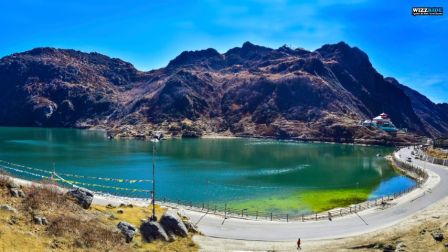
The Protected Area Permit (PAP) is necessary for visits to high-altitude and sensitive areas such as Tsomgo Lake, Lachen, Lachung, Yumthang Valley, Thangu, and other northern regions.
- Application Process: Unlike the RAP, the PAP cannot be obtained individually. It must be arranged through a registered travel agency or tour operator. Additionally, PAP applications require a minimum group size of two people.
- Validity: The duration of the PAP depends on the itinerary and is issued for a day excursion for Tsomgo Lake and for a minimum of 3 days & 2 nights to a maximum of 5 days & 4 nights for Lachen/Lachung/Yumthang/Thangu in North Sikkim.
- Supervision: Travel should be supervised by a registered guide.
2. Areas Open to Foreign Tourists (with RAP)
With a valid Restricted Area Permit (RAP), foreign tourists can explore several regions in Sikkim, each offering unique attractions:
East Sikkim
- Gangtok: The capital city of Sikkim, known for its vibrant markets, monasteries, and panoramic views of the Himalayas.
- Rumtek: Famous for the Rumtek Monastery, one of the most significant and largest monasteries in Sikkim.
- Pakyong: Known for its airport and scenic beauty.
- Aritar, Rhenock, Rorathang: Picturesque locations offering serene landscapes.
- Barapathing, Rongli: Scenic spots for nature lovers.
West Sikkim
- Gyalshing, Soreng: Quaint towns surrounded by lush greenery.
- Pemagyangtse, Khecheopalri: Renowned for their monasteries and pristine lakes.
- Tashiding, Yuksom: Historic and culturally rich areas.
South Sikkim
- Namchi: Home to the Statue of Unity and Char Dham.
- Ravangla: Offers stunning views of the Himalayan range.
North Sikkim
Accessible up to Phodong, Mangan, and Singhik up to Toong. A PAP is also required in addition to RAP for destinations like Tsomgo Lake and Yumthang Valley.
3. Restricted Areas (Foreigners Not Allowed)
Certain areas are restricted for foreign nationals due to security or environmental concerns:
- Nathula Pass: A strategic border pass.
- Gurudongmar Lake: A high-altitude lake near the Chinese border.
- Zuluk (East Sikkim): An area with sensitive border implications.
4. Where to Get Your RAP
Obtain your Restricted Area Permit (RAP) from the following authorized offices:
- Ministry of Home Affairs: Government of India, New Delhi
- All Indian Missions Abroad: —
- Immigration Offices at Airports: Mumbai, Kolkata, Chennai, New Delhi
Sikkim Tourism Offices:
- Tourist Information Center, SNT Complex, Siliguri: +91 8348554260 / +91 9832438118 / +91 9775600888
- Assistant Director – Tourism Department, Sikkim Tourism Office, Kolkata: 033 22817905
- Assistant Director – Tourism Department, Melli, South Sikkim: 9775453611, 03595-248536
- Assistant Director, Tourism Department, Sikkim Tourism Office, Rangpo, East Sikkim: 03592-240818
Sikkim Houses:
- Resident Commissioner/Assistant Director, Government of Sikkim, Sikkim House, New Delhi: 011-41680421/011-26115346
Other Offices:
- Deputy Commissioner: Darjeeling, West Bengal
- Deputy Secretary / Under Secretary, Home Department: Government of West Bengal, Kolkata
- Tourist Information Center, Bagdogra: +91 9933133819
- Tourist Officer – Tourism Information Centre, Pakyong: —
- Tourist Officer – Tourism Information Centre, Rambam: +91 7318714900
- Tourist Officer – Tourism Information Centre, Reshi: —
5. Required Documents
To apply for any permit, you’ll need to provide:
- Passport with valid Indian visa
- 2 recent passport-size photographs
- Completed application form (available at permit offices)
For PAP areas, additional requirements include:
- Application through a registered tour operator
- Detailed itinerary and guide details
6. Permit Extension
Extend your RAP 2–3 days before expiry at:
- Foreigners Registration Office (FRO), Gangtok
- Superintendent of Police: Namchi, Gyalshing, or Mangan
Total stay in Sikkim cannot exceed 60 days.
7. Trekking & Expedition Permits
For treks like Dzongri, Singalila, or Green Lake:
- Apply through registered agencies
- Provide medical fitness certificate from a government doctor
- Obtain clearance from Tourism, Forest, and Army departments
8. Important Notes
- Prior Approval Required: Citizens of Pakistan, Afghanistan, China (including Hong Kong & Macau), Myanmar, or Nigeria need prior approval from the Ministry of Home Affairs.
- Carry original documents, permits, and ID in restricted zones.
- Confirm permit rules with tour operators or local authorities before travel.
9. Special Cases and Processes
- Reference Category (PRC) Countries: Nationals, OCIs, or citizens of Pakistan, Afghanistan, or China (including Hong Kong and Macau) must obtain prior approval from the Ministry of Home Affairs before applying for a RAP.
- Individuals of Pakistani, Afghan, or Chinese Origin: Individuals with a birthplace in or who are nationals, OCIs, or citizens of Myanmar or Nigeria need prior clearance from either the Ministry of Home Affairs or the Home Department of Sikkim before entering the State.
- Visiting for Non-Tourism Activities: If a foreign national intends to visit for activities other than tourism (e.g., Business, Employment, Studies), they need prior permission from the Ministry of Home Affairs and it must be endorsed on their passport.
10. Additional Rules and Restrictions
- Group Travel Required: Both RAP and PAP require foreign tourists to travel in groups.
- Registered Agencies: PAP applications must be made through registered travel agencies.
11. Present Process Flow to apply for RAP
Frequently Asked Questions
Who needs a Restricted Area Permit (RAP) to visit Sikkim?
All foreign nationals, except citizens of Bhutan, require a Restricted Area Permit (RAP) to enter Sikkim.
Is there a fee for the Restricted Area Permit (RAP)?
No, the Restricted Area Permit (RAP) is issued free of cost.
Can I travel alone in Sikkim with a RAP?
No, the RAP is not granted to solo travelers. You must be part of a group of at least two or more people.
What is the validity of the Restricted Area Permit (RAP)?
The RAP is valid for 30 days and can be extended for another 30 days, up to a maximum of 60 days stay in Sikkim.
What should I do upon arrival in Sikkim with a RAP?
Foreign tourists must register with the Foreigners Registration Office (FRO) in Gangtok within 24 hours of their arrival.
What is a Protected Area Permit (PAP)?
The Protected Area Permit (PAP) is required for visiting restricted and ecologically sensitive areas like Tsomgo Lake, Lachen, Lachung, and Yumthang Valley.
Can I obtain a PAP on my own?
No, the PAP must be arranged through a registered travel agency or tour operator.
How long is the Protected Area Permit (PAP) valid?
The validity of the PAP depends on the itinerary and ranges from 1 to 5 days.
Which documents are required to obtain a Sikkim Travel Permit?
You need a valid passport with an Indian visa, two recent passport-size photographs, and a completed application form. For PAP areas, a detailed itinerary and guide details are also required.
Where can I apply for an extension of the RAP?
You can apply for an extension at the Foreigners Registration Office (FRO) in Gangtok or the Superintendent of Police in Namchi, Gyalshing, or Mangan.
Need Assistance?
For further assistance, contact Sikkim Tourism Offices, Tourist Information Centers, or book your trip via a registered travel agency.
Conclusion
Sikkim offers a mesmerizing blend of nature and culture. Ensure a smooth visit by understanding and adhering to the permit regulations outlined in this guide.